Who dated Alice Perrers?
Edward III of England dated Alice Perrers from ? until ?.
Alice Perrers
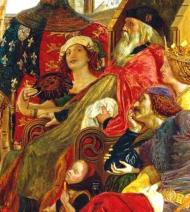
Alice Perrers (vers 1348 – 1400 ou 1401) est célèbre pour avoir été la maîtresse du roi d'Angleterre Édouard III. D'origines inconnues, on ignore si elle est mariée pendant sa jeunesse et si elle descend d'une famille de la noblesse. Alice fait la connaissance d'Édouard III en 1363 alors qu'elle est dame de compagnie de son épouse, Philippa de Hainaut. Leur liaison, initialement tenue secrète du vivant de la reine, produit plusieurs enfants illégitimes et permet à Alice de devenir la femme la plus riche du royaume, en raison des faveurs exubérantes que lui accorde le roi. La jeune femme exerce ainsi une influence immense à la cour au début des années 1370 et s'allie avec plusieurs personnalités recherchant son assistance.
Toutefois, l'ascension irrésistible d'Alice Perrers suscite la colère de nombreux membres de la cour et, lors de la session du Bon Parlement en 1376, elle est accusée d'avoir abusé de la confiance d'Édouard III et d'avoir contribué à son enrichissement personnel. Bannie du royaume, elle est rappelée quelques mois plus tard par le roi et reste à ses côtés jusqu'à sa mort en 1377. Écartée de la cour, elle passe les dernières années de sa vie à essayer de regagner les terres qu'elle a perdues. Ne bénéficiant pas d'une bonne réputation auprès des chroniqueurs de son époque, Alice a été méprisée par ses contemporains et accusée de tirer profit d'un roi affaibli par la vieillesse en faisant usage de sa jeunesse, de sa beauté et de son opportunisme.
Read more...Edward III of England
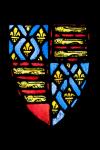
Edward III (13 November 1312 – 21 June 1377), also known as Edward of Windsor before his accession, was King of England from January 1327 until his death in 1377. He is noted for his military success and for restoring royal authority after the disastrous and unorthodox reign of his father, Edward II. Edward III transformed the Kingdom of England into one of the most formidable military powers in Europe. His fifty-year reign is one of the longest in English history, and saw vital developments in legislation and government, in particular the evolution of the English Parliament, as well as the ravages of the Black Death. He outlived his eldest son, Edward the Black Prince, and was succeeded by his grandson, Richard II.
Edward was crowned at age fourteen after his father was deposed by his mother, Isabella of France, and her lover, Roger Mortimer. At the age of seventeen, he led a successful coup d'état against Mortimer, the de facto ruler of England, and began his personal reign. After a successful campaign in Scotland, he declared himself rightful heir to the French throne, starting the Hundred Years' War (1337–1453). Following some initial setbacks, this first phase of the war went exceptionally well for England and would become known as the Edwardian War. Victories at Crécy and Poitiers led to the highly favourable Treaty of Brétigny (1360), in which England made territorial gains, and Edward renounced his claim to the French throne. Edward's later years were marked by foreign policy failure and domestic strife, largely as a result of his decreasing activity and poor health. The second phase of the Hundred Years' War began in 1369, leading to the loss of most of Edward's conquests, save for the Pale of Calais, by 1375.
Edward was temperamental and thought himself capable of feats such as healing by the royal touch, as some prior English kings did. He was also capable of unusual clemency. He was in many ways a conventional medieval king whose main interest was warfare, but he also had a broad range of non-military interests. Admired in his own time, and for centuries after, he was later denounced as an irresponsible adventurer by Whig historians, but modern historians credit him with significant achievements.
Read more...