Who dated Countess Olga Kalinovskya?
Alexander II of Russia dated Countess Olga Kalinovskya from ? until ?.
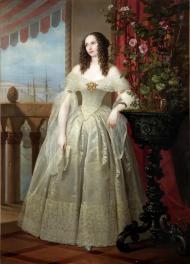
Countess Olga Kalinovskya
Alexander II of Russia
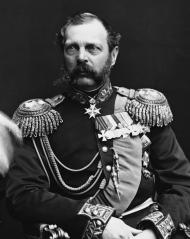
Alexander II (29 April 1818 – 13 March 1881) was Emperor of Russia, King of Poland, and Grand Duke of Finland from 2 March 1855 until his assassination on 13 March 1881. He is also known as Alexander the Liberator because of his historic Edict of Emancipation, which officially abolished Russian serfdom in 1861. Crowned on 7 September 1856, he succeeded his father Nicholas I and was succeeded by his son Alexander III.
In addition to emancipating serfs across the Russian Empire, Alexander's reign brought several other liberal reforms, such as improving the judicial system, relaxing media censorship, eliminating some legal restrictions on Jews, abolishing corporal punishment, promoting local self-government, strengthening the Imperial Russian Army and the Imperial Russian Navy, modernizing and expanding schools and universities, and diversifying the Russian economy. However, many of these reforms were met with intense backlash and cut back or reversed entirely, and Alexander eventually shifted towards a considerably more conservative political stance following an assassination attempt against him in 1866.
The foreign policy of Alexander was relatively pacifist, especially in comparison to his father's, although he did continue the Russian Empire's expansionist campaigns into the Far East, the Caucasus, and Central Asia. As a consequence of the Great Game and the Crimean War, Alexander was particularly opposed to and wary of the United Kingdom. He was also notably supportive of the United States; Alexander backed the Union during the American Civil War and even sent Russian warships to New York Harbor and San Francisco Bay to deter attacks by the Confederate Navy. In 1867, he sold Alaska to the United States, owing partly to his concern that it would be nearly impossible to prevent the Russian Empire's North American colonies, which bordered British Columbia and the North-Western Territory, from falling into British hands in the event of another war. Seeking peace and stability in the European continent, he moved away from bellicose France upon the fall of Napoleon III in 1870 and subsequently joined Germany and Austria-Hungary in the League of the Three Emperors in 1873.
Under Alexander's leadership, the Russian Empire engaged in the Russo-Turkish War of 1877–1878, resulting in the independence of Bulgaria, Montenegro, Romania, and Serbia from the Ottoman Empire. His expansionism on the Far Eastern front led to the Amur Annexation, and he also approved Russian military plans on the Caucasian front that culminated in the Circassian genocide. While he was disappointed by the results of the Congress of Berlin in 1878, he abided by that agreement. Among his greatest domestic challenges was a Polish uprising in January 1863, to which he responded by stripping Poland's separate constitution and directly incorporating the kingdom into the Russian Empire. In the period preceding his assassination in 1881, Alexander had been proposing additional parliamentary reforms to counter the rise of nascent revolutionary and anarchistic movements in the region.
Read more...