Who dated Grace Elliott?
George Cholmondeley, 1st Marquess of Cholmondeley dated Grace Elliott from ? until ?.
Arthur Annesley, 1st Earl of Mountnorris dated Grace Elliott from ? until ?.
Louis Philippe II, Duke of Orléans dated Grace Elliott from ? until ?.
George IV of the United Kingdom dated Grace Elliott from ? until ?.
Grace Elliott
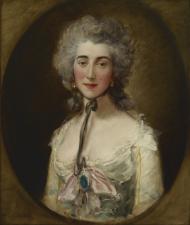
Grace Dalrymple Elliott (c. 1754 – 16 May 1823) was a Scottish courtesan, writer and spy resident in Paris during the French Revolution. She was an eyewitness to events detailed in her memoirs, Journal of my life during the French Revolution (Ma Vie sous la Révolution) published posthumously in 1859. She was mistress, first to the future George IV, by whom she is said to have borne an illegitimate daughter, and then to the Duke of Orléans. Elliott trafficked correspondence and helped condemned Royalists and members of the French nobility escape from the First French Republic during the Reign of Terror. She was arrested several times but managed to avoid the guillotine, and was released following the military coup that ended the Terror and resulted in the execution of Robespierre.
In the acclaimed but widely controversial 2001 film adaptation of her memoirs by French New Wave director Éric Rohmer as The Lady and the Duke, Grace Elliot was played by English actress Lucy Russell.
Read more...George Cholmondeley, 1st Marquess of Cholmondeley
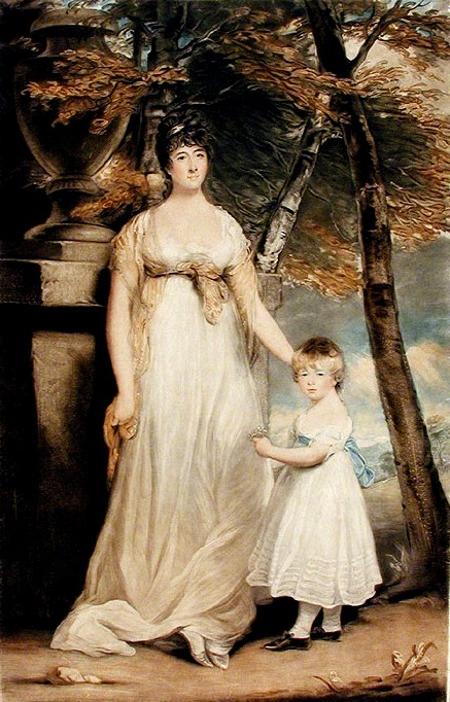
George James Cholmondeley, I marchese di Cholmondeley (Hardingstone, 11 maggio 1749 – Londra, 10 aprile 1827), è stato un politico e nobile britannico.
Read more...Grace Elliott
Arthur Annesley, 1st Earl of Mountnorris
Grace Elliott
Louis Philippe II, Duke of Orléans
Louis Philippe II, Duke of Orléans (Louis Philippe Joseph; 13 April 1747 – 6 November 1793), was a French Prince of the Blood who supported the French Revolution.
Louis Philippe II was born at the Château de Saint-Cloud to Louis Philippe I, Duke of Chartres, and his wife, Louise Henriette de Bourbon-Conti. He was titled Duke of Montpensier at birth. When his grandfather Louis, Duke of Orléans, died in 1752, his father became the new Duke of Orléans and Louis Philippe II became Duke of Chartres. When his father died in 1785, he became Duke of Orléans and First Prince of the Blood. He was styled as Serene Highness (French: Son Altesse Sérénissime).
In 1792, during the Revolution, Louis Philippe changed his name to Philippe Égalité. He was a cousin of King Louis XVI and one of the wealthiest men in France. He actively supported the Revolution of 1789, and was a strong advocate for the elimination of the present absolute monarchy in favor of a constitutional monarchy. Égalité voted for the death of Louis XVI; however, he was himself guillotined in 1793 during the Reign of Terror. His son, also named Louis Philippe, became King of the French after the July Revolution of 1830. After Louis Philippe II, the term Orléanist came to be attached to the movement in France that favored a constitutional monarchy.
Read more...Grace Elliott
George IV of the United Kingdom
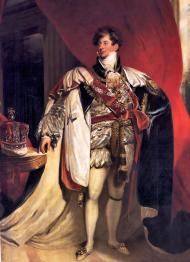
George IV (George Augustus Frederick; 12 August 1762 – 26 June 1830) was King of the United Kingdom of Great Britain and Ireland and King of Hanover from 29 January 1820 until his death in 1830. At the time of his accession to the throne, he was acting as prince regent for his father, King George III, having done so since 5 February 1811 during his father's final mental illness.
George IV was the eldest child of King George III and Queen Charlotte. He led an extravagant lifestyle that contributed to the fashions of the Regency era. He was a patron of new forms of leisure, style and taste. He commissioned John Nash to build the Royal Pavilion in Brighton and remodel Buckingham Palace, and commissioned Jeffry Wyatville to rebuild Windsor Castle. George's charm and culture earned him the title "the first gentleman of England", but his dissolute way of life and poor relationships with his parents and his wife, Caroline of Brunswick, earned him the contempt of the people and dimmed the prestige of the monarchy. He excluded Caroline from his coronation and asked the government to introduce the unpopular Pains and Penalties Bill in an unsuccessful attempt to divorce her.
George's rule was tarnished by scandal and financial extravagance. His ministers found his behaviour selfish, unreliable and irresponsible, and he was strongly influenced by favourites. During most of George's regency and reign, Lord Liverpool controlled the government as prime minister of the United Kingdom. Liverpool's government presided over Britain's ultimate victory over Napoleon and negotiated a peace settlement with the French. After Liverpool's retirement, George was forced to accept Catholic emancipation despite opposing it. His only legitimate child, Princess Charlotte, predeceased him in 1817, as did his childless younger brother Prince Frederick in 1827, so he was succeeded by another younger brother, William IV.
Read more...