Who dated Jean-Jacques Rousseau?
Françoise-Louise de Warens dated Jean-Jacques Rousseau from ? until ?. The age gap was 13 years, 2 months and 28 days.
Jean-Jacques Rousseau
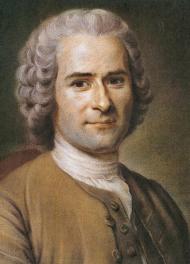
Jean-Jacques Rousseau (UK: , US: ; French: [ʒɑ̃ʒak ʁuso]; 28 June 1712 – 2 July 1778) was a Genevan philosopher, philosophe, writer, and composer. His political philosophy influenced the progress of the Age of Enlightenment throughout Europe, as well as aspects of the French Revolution and the development of modern political, economic, and educational thought.
Rousseau's Discourse on Inequality, which argues that private property is the source of inequality, and The Social Contract, which outlines the basis for a legitimate political order, are cornerstones in modern political and social thought. Rousseau's sentimental novel Julie, or the New Heloise (1761) was important to the development of preromanticism and romanticism in fiction. His Émile, or On Education (1762) is an educational treatise on the place of the individual in society. Rousseau's autobiographical writings—the posthumously published Confessions (completed in 1770), which initiated the modern autobiography, and the unfinished Reveries of the Solitary Walker (composed 1776–1778)—exemplified the late 18th-century "Age of Sensibility", and featured an increased focus on subjectivity and introspection that later characterized modern writing.
Read more...Françoise-Louise de Warens
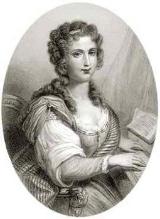
Françoise-Louise de Warens, born Louise Éléonore de la Tour du Pil, also called Madame de Warens (31 March 1699 – 29 July 1762), was the benefactress and mistress of Jean-Jacques Rousseau.
Warens was born in Vevey, into a Swiss Protestant family who had immigrated to Annecy, but became a Roman Catholic in 1726 in order to receive a church pension which had been instated to increase the spread of Roman Catholicism near Geneva, then a bastion of Protestantism.
She was known to have led a liberal life for a woman of her time. She annulled her marriage to M. de Warens in 1726 after failing in a clothing business. Rousseau met her for the first time on Palm Sunday 1728. It was said that she was a spy and a converter for Savoy, then part of the Kingdom of Sardinia. Though Warens was originally a teacher to Rousseau, they became sexually engaged after she openly initiated him in the matters of love and "intimacy". Françoise-Louise de Warens died in poverty in 1762 in Chambéry, of which Rousseau did not learn until six years afterwards. Rousseau describes his relationship with her in his Confessions.
Read more...