Who dated Ludovico Sforza?
Bernardina de Corradis dated Ludovico Sforza from ? until ?.
Cecilia Gallerani dated Ludovico Sforza from ? until ?.
Ludovico Sforza
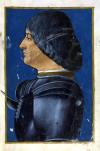
Ludovico Maria Sforza (Italian: [ludoˈviːko maˈriːa ˈsfɔrtsa]; 27 July 1452 – 27 May 1508), also known as Ludovico il Moro (Italian: [il ˈmɔːro]; 'the Moor'), and called the "arbiter of Italy" by historian Francesco Guicciardini, was an Italian nobleman who ruled as the Duke of Milan from 1494 to 1499.
Although he was the fourth son and excluded from his family's succession, Ludovico was ambitious and managed to obtain dominion over Milan. He first assumed the regency from his sister-in-law Bona, then took over from his deceased nephew Gian Galeazzo, whom some say he poisoned. Considered enlightened, generous, and peaceful, he became a patron of artists and writers. His court in Milan became one of the most important in Europe during the Italian Renaissance.
Somewhat contrarily, Ludovico was also considered fearful and of a fickle nature. To face the threats of King Alfonso II of Naples, Ludovico called the French to Italy; when threatened by the French, he could not face the danger, and was saved only thanks to the intervention of his wife, Beatrice. When she died, he went into a depression and the state of his court fell from jubilance to despair. He finally succumbed to King of France Louis XII, who imprisoned him in France where he died.
Read more...Bernardina de Corradis
Bernardina de Corradis (fl. XV-XVI secolo) fu amante di Ludovico il Moro, duca di Milano.
Read more...Ludovico Sforza
Cecilia Gallerani
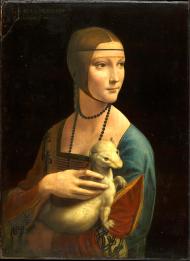
Cecilia Gallerani (Italian pronunciation: [tʃeˈtʃiːlja ɡalleˈraːni]; early 1473 – 1536) was the favourite and most celebrated of the many mistresses of Ludovico Sforza, known as Lodovico Il Moro, Duke of Milan. She is best known as the subject of Leonardo da Vinci's painting Lady with an Ermine (c. 1489). While posing for the painting, she invited Leonardo, who at the time was working as court artist for Sforza, to meetings at which Milanese intellectuals discussed philosophy and other subjects. Gallerani herself presided over these discussions.
Read more...