Who dated Maud Gonne?
Lucien Millevoye dated Maud Gonne from ? until ?. The age gap was 16 years, 4 months and 20 days.
William Butler Yeats dated Maud Gonne from ? until ?. The age gap was 1 years, 9 months and 8 days.
Maud Gonne
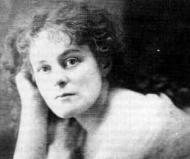
Maud Gonne MacBride (Irish: Maud Nic Ghoinn Bean Mhic Giolla Bhríghde; born Edith Maud Gonne; 21 December 1866 – 27 April 1953) was an Irish republican revolutionary, suffragette and actress. She was, contrary to her own claims of Anglo-Irish descent, English on the sides of both parents, and was won over to Irish nationalism by the plight of people evicted in the Land Wars. MacBride actively agitated for Home Rule and then for the republic declared in 1916. During the 1930s, as a founding member of the Social Credit Party, she promoted the distributive programme of C. H. Douglas. Gonne was well known for being the muse and long-time love interest of Irish poet W. B. Yeats.
Read more...Lucien Millevoye
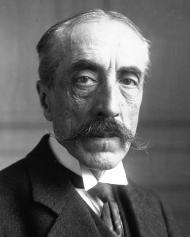
Lucien Millevoye (1 August 1850 – 25 March 1918) was a French journalist and right-wing politician, now best known for his relationship with the Irish revolutionary and muse of W. B. Yeats, Maud Gonne.
Millevoye was born in Grenoble in 1850, the grandson of the poet Charles Hubert Millevoye. He was the editor of La Patrie and a supporter of General Boulanger. He served as Boulangist member for Amiens in the French Chamber of Deputies from 1889 to 1893. He was elected a Nationalist deputy from Paris in 1898 and 1902. In the late 1880s he went to Russia to further the cause of a Franco-Russian Alliance. He claimed to be Boulanger's emissary to the Russian Emperor in St Petersburg, a claim Boulanger himself apparently denied. He also supported the Entente Cordiale.
During the late 1880s and throughout the 1890s, following his separation from his wife Adrienne, he had a relationship with the Irish activist Maud Gonne which produced two children, Georges Silvère (1890–1891) who died of meningitis, and Iseult Lucille Germaine (1894–1954). Gonne was deeply involved in the Irish independence movement, editing the French language nationalist newspaper L'Irlande Libre in the run-up to the centennial of the 1798 Rebellion. Gonne left Millevoye in the summer of 1900 and returned to Ireland with Iseult.
From 1898 until his death in 1918 Millevoye served as the deputy for Paris, where he died on 25 March 1918. He was originally entombed at Père Lachaise Cemetery in Paris, France, but moved to an unknown location in Abbeville per Père Lachaise Cemetery records.
Read more...Maud Gonne
William Butler Yeats

William Butler Yeats [jeɪts] (* 13. Juni 1865 in Sandymount, County Dublin; † 28. Januar 1939 in Menton, Frankreich) war ein irischer Dichter. Er gilt als einer der bedeutendsten englischsprachigen Schriftsteller des 20. Jahrhunderts. 1923 erhielt er als erster Ire den Literaturnobelpreis. Er war der Bruder des Künstlers und Autors Jack Butler Yeats (1871–1957) und der Vater des Politikers Michael Yeats (1921–2007). Seine Schwestern waren Elizabeth Yeats (1868–1940) und Susan Mary Yeats (1866–1949).
William Butler Yeats war Förderer der irischen Renaissance und schloss sich zeitweise einer revolutionären Bewegung an. 1899 gründete er gemeinsam mit Lady Gregory und Edward Martyn das Irish Literary Theatre. Aus diesem Projekt ging 1904 das Abbey Theatre, das irische Nationaltheater, hervor. Yeats war einige Zeit später für zwei Amtsperioden Senator.
Als Schriftsteller ließ sich Yeats von alten irischen Vorbildern, keltischer Mythologie und traditionellen englischen Dichtern wie etwa Blake, Shakespeare oder Shelley beeinflussen. Er schuf eine „national-irische, mythisch-mystische, oft symbolische Dichtung“. Seine frühen Gedichte können der englischen bzw. irischen Romantik zugeordnet werden. Im Zeitalter der Moderne verfasste Yeats zunehmend auch mehrere moderne Gedichte, die sein herausragendes Spätwerk markieren. Teilweise heißt es, dass er seine größten literarischen Arbeiten erst nach dem Erhalt des Nobelpreises verfasste.
Yeats’ Einfluss als ein Künstler, der zeitlebens um den angemessenen ästhetischen Ausdruck für eine „gründlich aus den Fugen geratene Welt“ rang, reicht dabei weit über die irische Literatur hinaus. In seinen Werken zeigt er eine „erstaunliche Wandlungs- und Steigerungsfähigkeit“, die ihn zum „schlechthin repräsentativen Dichter zwischen 1890 und 1940“ macht. Neben dem Romancier James Joyce gilt Yeats häufig als größter irischer Literat dieser Epoche.
Read more...