Who dated Amalie Sophie von Wallmoden?
George II of Great Britain dated Amalie Sophie von Wallmoden from ? until ?. The age gap was 20 years, 4 months and 22 days.
Amalie Sophie von Wallmoden

Amalie Sophie von Wallmoden, Countess of Yarmouth, gebürtiger Name Amalie Sophie Marianne von Wendt (* 1. April 1704 in Hannover; † 19. Oktober 1765 ebenda) war eine deutsche Adlige und Mätresse des britischen Königs Georg II.
Read more...George II of Great Britain
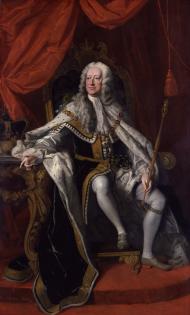
George II (George Augustus; German: Georg August; 30 October / 9 November 1683 – 25 October 1760) was King of Great Britain and Ireland, Duke of Brunswick-Lüneburg (Hanover) and a prince-elector of the Holy Roman Empire from 11 June 1727 (O.S.) until his death in 1760.
Born and brought up in northern Germany, George is the most recent British monarch born outside Great Britain. The Act of Settlement 1701 and the Acts of Union 1707 positioned his grandmother Sophia of Hanover and her Protestant descendants to inherit the British throne. George married Princess Caroline of Brandenburg-Ansbach, with whom he had eight children. After the deaths of George's grandmother and Anne, Queen of Great Britain, George's father, the Elector of Hanover, ascended the British throne as George I in 1714. In the first years of his father's reign as king, Prince George was associated with opposition politicians until they rejoined the governing party.
As king from 1727, George exercised little control over British domestic policy, which was largely controlled by the Parliament of Great Britain. As elector he spent twelve summers in Hanover, where he had more direct control over government policy. He had a difficult relationship with his eldest son, Frederick, who supported the parliamentary opposition. During the War of the Austrian Succession, George participated at the Battle of Dettingen, and thus became the most recent British monarch to lead an army in battle. Supporters of the Stuart claimant to the British throne, James, attempted and failed to depose George in the Jacobite rising of 1745 led by James's son. Prince Frederick died suddenly in 1751, before his father, and George was succeeded by Frederick's eldest son, George III.
For two centuries after George II's death, historians tended to view him with disdain, concentrating on his mistresses, short temper, and boorishness. Since then, reassessment of his legacy has led scholars to conclude that he exercised more influence in foreign policy and military appointments than previously thought.
Read more...