Who dated Bilistiche?
Ptolemy II Philadelphus dated Bilistiche from ? until ?.
Bilistiche
Bilistiche, ou Bellistiche ou Belistiche (en grec ancien : Βιλιστίχη), est une hétaïre du IIIe siècle avant notre ère qui devient la compagne du pharaon Ptolémée II et qui est déifiée après sa mort.
Son origine est incertaine : Macédoineselon Pausanias, ou Argolide selon Athénée de Naucratis qui rapporte sa prétention à descendre des Atrides. Mais Plutarque rapporte qu'elle fut vendue au marché comme esclave.
Elle est l'une des premières femmes après Cynisca à gagner un prix olympique dans une course hippique en remportant la synoris (course de chars attelés) menée par deux poulains lors des 128e Jeux olympiques antiques, en -268. Elle récidive aux Jeux suivants (-264) en remportant la course de char à quatre poulains.
Elle devient la compagne de Ptolémée II vers -268. Elle est sans doute la mère de Ptolémée Andromaque, fils illégitime de Ptolémée II.
Elle est choisie comme canéphore en -251. Son nom apparaît en effet comme celui d'une prêtresse de trente-cinq ans, fille d'un certain Philon et proche du pharaon Ptolémée II dans un papyrus égyptien enregistrant son serment. Certains hellénistes modernes, doutant qu'un tel honneur ait été accordé à une ancienne prostituée, ont proposé de voir en elle une homonyme de la célèbre propriétaire du char vainqueur.
D'après Clément d'Alexandrie, elle meurt à Canope à une date inconnue, mais avant -246. Ptolémée fait transporter et ensevelir son corps au temple de Sérapis dans le quartier de Rakôtis. Le pharaon la déifie ensuite sous le nom d'Aphrodite Bilistiche.
Read more...Ptolemy II Philadelphus
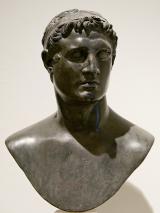
Ptolemy II Philadelphus (Ancient Greek: Πτολεμαῖος Φιλάδελφος, Ptolemaîos Philádelphos, "Ptolemy, sibling-lover"; 309 – 28 January 246 BC) was the pharaoh and basileus of the Ptolemaic Kingdom from 284 to 246 BC. He was the son of Ptolemy I, the Macedonian general of Alexander the Great who founded the Ptolemaic Kingdom after the death of Alexander, and Queen Berenice I, originally from Macedon.
During Ptolemy II's reign, the material and literary splendour of the Alexandrian court was at its height. He promoted the Museum and Library of Alexandria. In addition to Egypt, Ptolemy's empire encompassed much of the Aegean and Levant. He pursued an aggressive and expansionist foreign policy with mixed success. From 275 to 271 BC, he led the Ptolemaic Kingdom against the rival Seleucid Empire in the First Syrian War and extended Ptolemaic power into Cilicia and Caria, but lost control of Cyrenaica after the defection of his half-brother Magas. In the Chremonidean War (c. 267–261 BC), Ptolemy confronted Antigonid Macedonia for control of the Aegean and suffered serious setbacks. This was followed by a Second Syrian War (260–253 BC) against the Seleucid empire, in which many of the gains from the first war were lost.
Read more...