Who dated Dalida?
Alain Delon dated Dalida from until . The age gap was 2 years, 9 months and 22 days.
Christian de La Mazière dated Dalida from until . The age gap was 10 years, 4 months and 26 days.
Luigi Tenco dated Dalida from until . The age gap was 5 years, 2 months and 4 days.
Richard Chanfray dated Dalida from until . The age gap was 7 years, 2 months and 18 days.
Dalida

Iolanda Cristina Gigliotti (Italian: [joˈlanda kriˈstiːna dʒiʎˈʎɔtti]; 17 January 1933 – 3 May 1987), professionally known as Dalida (French: [dalida], Italian: [daliˈda]; Arabic: داليدا), was an Italian naturalized French singer and actress. Throughout her international career, Dalida sold more than 140 million records worldwide. Some of her best known songs include "Bambino", "Ciao amore, ciao", "Gigi l'amoroso", "Il venait d'avoir 18 ans", "Laissez-moi danser", "Salma ya salama", "Helwa ya baladi", "Mourir sur scène", and "Paroles, paroles" featuring spoken word by film star Alain Delon.
Initially an actress, she made her debut in the film A Glass and a Cigarette by Niazi Mustapha in 1955. A year later, having signed with the Barclay record company, Dalida achieved her first success as a singer with "Bambino". Following this, she became the top-selling recording artist in France between 1957 and 1961. Her music charted in many countries in Europe and Latin America. She collaborated with singers such as Julio Iglesias, Charles Aznavour, Johnny Mathis and Petula Clark.
Although she made a few films during her career as a singer, she effectively reconnected with cinema with The Sixth Day, a film by Youssef Chahine released in 1986. In France, although the film was hailed by critics, it was a commercial failure.
Dalida was deeply disturbed by the suicide of her partner Luigi Tenco in 1967. Despite this, she forged ahead with her career, forming the record label International Show with her brother Orlando, recording more music and performing at concerts and music competitions. After struggling with bouts of depression for many years, Dalida died by suicide from a drug overdose in 1987.
Read more...Alain Delon
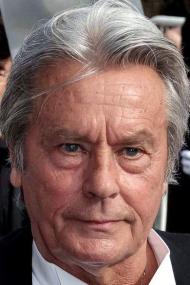
Alain Fabien Maurice Marcel Delon (Sceaux, 8 de novembro de 1935 – Douchy-Montcorbon, 18 de agosto de 2024) foi um ator e empresário franco-suíço. Reconhecido como um protagonista cultural e cinematográfico do século XX, Delon emergiu como um dos principais atores europeus das décadas de 1960, 1970 e 1980, e tornou-se um símbolo sexual internacional.
No cinema, Delon alcançou aclamação da crítica por seus papéis em filmes como O Sol por Testemunha (1960), Rocco e Seus Irmãos (1960), O Eclipse (1962), O Leopardo (1963), La Tulipe noire (1964), O Samurai (1967), La Piscine (1969), Le Cercle Rouge (1970), Un flic (1972) e Monsieur Klein (1976). Ao longo de sua carreira, trabalhou com muitos diretores, incluindo Luchino Visconti, Jean-Luc Godard, Jean-Pierre Melville, Michelangelo Antonioni, Louis Malle e Agnès Varda. Delon recebeu diversos prêmios de cinema e entretenimento ao longo de sua carreira. Em 1985, ganhou o Prêmio César de Melhor Ator por sua atuação em Notre Histoire (1984). Em 1991, tornou-se membro da Legião de Honra da França. No 45º Festival Internacional de Cinema de Berlim, ganhou o Urso de Ouro Honorário. No Festival de Cinema de Cannes de 2019, recebeu a Palma de Ouro Honorária .
Ele é considerado uma das figuras mais conhecidas da paisagem cultural francesa. Seu estilo, aparência e papéis, que fizeram dele um ícone pop internacional, lhe renderam popularidade duradoura. É considerado um dos maiores atores franceses de todos os tempos.
Read more...Dalida
Christian de La Mazière
Christian de La Mazière, né Christian Lamazière le à Tours, mort le à Paris, est un journaliste et imprésario français, connu pour son passé de collaborateur engagé dans la Waffen-SS pendant la Seconde Guerre mondiale.
Read more...Dalida
Luigi Tenco
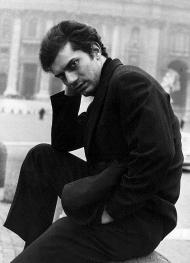
Luigi Tenco (21 March 1938 – 27 January 1967) was an Italian singer-songwriter. He died on the night of 27 January 1967 after a performance at the Sanremo Music Festival. His death was ruled to be the result of suicide, but even decades later, a plethora of evidence in favor of murder was cause to reopen the investigation twice.
Read more...Dalida
Richard Chanfray
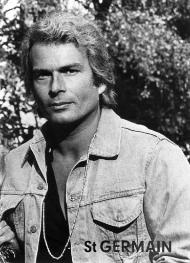
Richard Chanfray (dit Saint-Germain ou Richard Saint-Germain), né le à Lyon et mort le à Ramatuelle, est une personnalité médiatique française, peintre, chanteur et acteur.
Il affirmait être le comte de Saint-Germain, aventurier prétendument alchimiste et immortel. Il est principalement connu pour avoir été pendant plusieurs années le compagnon de la chanteuse Dalida.
Read more...