Who dated Elizaveta Vorontsova?
Peter III of Russia dated Elizaveta Vorontsova from ? until ?. The age gap was 11 years, 6 months and 14 days.
Elizaveta Vorontsova
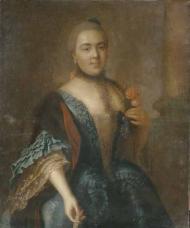
Countess Elizaveta Romanovna Vorontsova (Russian: Елизавета Романовна Воронцова; 13 August 1739 – 2 February 1792) was a Russian noblewoman and lady-in-waiting. She was a mistress of Emperor Peter III of Russia (reigned February to July 1762). During their affair, rumors suggested that Peter had intentions of divorcing his wife Catherine (the future empress) in order to marry Vorontsova.
Read more...Peter III of Russia
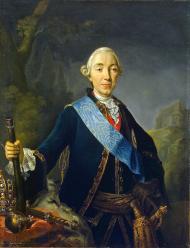
Peter III Fyodorovich (Russian: Пётр III Фёдорович, romanized: Pyotr III Fyodorovich, born Charles Peter Ulrich of Schleswig-Holstein-Gottorp; 21 February 1728 – 17 July 1762) was Emperor of Russia from 5 January 1762 until 9 July of the same year, when his wife, Catherine II "the Great", overthrew him in a palace coup d'état. He implemented many notable reforms during his reign, though he is criticised for undoing Russian gains in the Seven Years' War by forming an alliance with Prussia.
Peter was the son of Duke Charles Frederick of Holstein-Gottorp, and Grand Duchess Anna Petrovna of Russia, the latter of whom died of puerperal fever after childbirth. After his succession to the throne of Holstein-Gottorp on the event of his father's death, Peter was made heir presumptive to both the Russian and Swedish thrones in 1742. Due to his conversion to Russian Orthodoxy, he was disqualified from becoming King of Sweden.
Peter married his paternal second cousin, Princess Sophie of Anhalt-Zerbst, who took the Orthodox name of Catherine Alexeievna, in 1745. They had one child who survived to adulthood, Paul Petrovich. Peter succeeded his maternal aunt as Emperor of Russia in 1762. After a 186-day reign, Peter III was overthrown by his wife, and soon died under unclear circumstances. The official cause proposed by Catherine's new government was that he died due to hemorrhoids. This explanation was met with skepticism, both in Russia and abroad, with notable critics such as Voltaire and d'Alembert expressing doubt about the plausibility of death from such a condition.
After Peter III's death, many impostors thrived, pretending to be him, the most famous of whom were Yemelyan Pugachev and the "Montenegerin Tsar Peter III" (Stephan the Little).
Read more...