Who dated George IV of the United Kingdom?
Grace Elliott dated George IV of the United Kingdom from ? until ?.
Anne O'Brien dated George IV of the United Kingdom from ? until ?.
Louise Joséphine de Caumont dated George IV of the United Kingdom from ? until ?. The age gap was 7 years, 0 months and 15 days.
Eliza Fox dated George IV of the United Kingdom from ? until ?.
Elizabeth Conyngham, Marchioness Conyngham dated George IV of the United Kingdom from ? until ?. The age gap was 6 years, 11 months and 19 days.
Mary Darby Robinson dated George IV of the United Kingdom from ? until ?. The age gap was 3 years, 8 months and 16 days.
Olga Zherebtsova dated George IV of the United Kingdom from ? until ?.
George IV of the United Kingdom
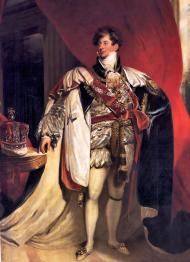
George IV (George Augustus Frederick; 12 August 1762 – 26 June 1830) was King of the United Kingdom of Great Britain and Ireland and King of Hanover from 29 January 1820 until his death in 1830. At the time of his accession to the throne, he was acting as prince regent for his father, King George III, having done so since 5 February 1811 during his father's final mental illness.
George IV was the eldest child of King George III and Queen Charlotte. Known affectionately as "Prinny" by friends, he led an extravagant lifestyle that contributed to the fashions of the Regency era. He was a patron of new forms of leisure, style and taste. He commissioned John Nash to build the Royal Pavilion in Brighton and remodel Buckingham Palace, and commissioned Jeffry Wyatville to rebuild Windsor Castle. George's charm and culture earned him the title "the first gentleman of England", but his dissolute way of life and poor relationships with his parents and his wife, Caroline of Brunswick, earned him the contempt of the people and dimmed the prestige of the monarchy. He excluded Caroline from his coronation and asked the government to introduce the unpopular Pains and Penalties Bill in an unsuccessful attempt to divorce her.
George's rule was tarnished by scandal and financial extravagance. His ministers found his behaviour selfish, unreliable and irresponsible, and he was strongly influenced by favourites. During most of George's regency and reign, Lord Liverpool controlled the government as prime minister of the United Kingdom. Liverpool's government presided over Britain's ultimate victory over Napoleon and negotiated a peace settlement with the French. After Liverpool's retirement, George was forced to accept Catholic emancipation despite opposing it. His only legitimate child, Princess Charlotte, predeceased him in 1817, as did his childless younger brother Prince Frederick in 1827, so he was succeeded by another younger brother, William IV.
Read more...Grace Elliott
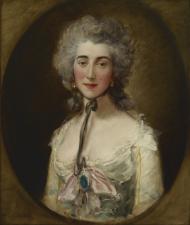
Grace Dalrymple Elliott (c. 1754 – 16 May 1823) was a Scottish courtesan, writer and spy resident in Paris during the French Revolution. She was an eyewitness to events detailed in her memoirs, Journal of my life during the French Revolution (Ma Vie sous la Révolution) published posthumously in 1859. She was mistress, first to the future George IV, by whom she is said to have borne an illegitimate daughter, and then to the Duke of Orléans. Elliott trafficked correspondence and helped condemned Royalists and members of the French nobility escape from the First French Republic during the Reign of Terror. She was arrested several times but managed to avoid the guillotine, and was released following the military coup that ended the Terror and resulted in the execution of Robespierre.
In the acclaimed but widely controversial 2001 film adaptation of her memoirs by French New Wave director Éric Rohmer as The Lady and the Duke, Grace Elliot was played by English actress Lucy Russell.
Read more...George IV of the United Kingdom
Anne O'Brien
George IV of the United Kingdom
Louise Joséphine de Caumont
George IV of the United Kingdom
Eliza Fox
George IV of the United Kingdom
Elizabeth Conyngham, Marchioness Conyngham
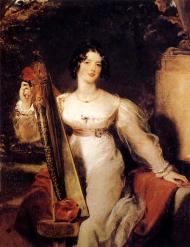
Elizabeth Conyngham, Marchioness Conyngham (née Denison; 29 March 1770 – 11 October 1861) was an English courtier and noblewoman. She is thought to be the last mistress of King George IV of the United Kingdom.
Read more...George IV of the United Kingdom
Mary Darby Robinson
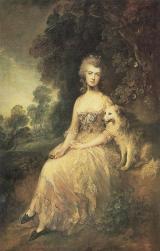
Mary Robinson (née Darby; 27 November 1757 – 26 December 1800) was an English actress, poet, dramatist, novelist and celebrity figure. She lived in England, in the cities of Bristol and London; she also lived in France and Germany for a time. She enjoyed poetry from the age of seven and started working, first as a teacher and then as an actress, from the age of 14. She wrote many plays, poems and novels. She was a celebrity, gossiped about in newspapers, famous for her acting and writing. During her lifetime she was known as "the English Sappho". She earned her nickname "Perdita" for her role as Perdita (heroine of Shakespeare's The Winter's Tale) in 1779, and was the first public mistress of King George IV while he was still Prince of Wales. Robinson is the author of the Gothic novels Vancenza; or, the Dangers of Credulity (1792) and Hubert de Sevrac (1796).
Read more...George IV of the United Kingdom
Olga Zherebtsova
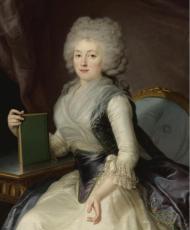
О́льга Алекса́ндровна Жеребцо́ва (урождённая Зубова; 1765 — 1 [12] марта 1849 года, Санкт-Петербург, Российская империя) — российская аристократка, авантюристка эпохи Екатерины II и Павла I (в России), Георга III (в Великобритании). Была призвана ко двору, стала известна и пользовалась большим успехом в высшем свете с началом фаворитства её брата Платона Зубова. Будучи замужем за действительным камергером Александром Алексеевичем Жеребцовым (1754—1807), в течение 9 лет состояла практически в открытой любовной связи с британским посланником в России Чарльзом Уитвортом.
При Павле I стала одной из вдохновительниц и активной участницей, вместе со своим любовником и братьями, заговора против императора, однако накануне дворцового переворота 1801 года уехала за границу. В Берлине и Лондоне фигурировала в центре нескольких великосветских скандалов и политических интриг русской дипломатии. Несмотря на скандальную репутацию, пользовалась большим успехом при дворе короля Великобритании Георга III. Стала одной из возлюбленных его сына принца Уэльского, будущего короля Георга IV, от которого (предположительно) родила внебрачного сына.
В 1810 году вернулась в Санкт-Петербург, где провела последующие годы, сторонясь двора и светской жизни. В 1840-х годах была собеседницей писателя и публициста Александра Ивановича Герцена, оставившего заметки о ней; когда писатель подвергся гонениям, добилась через влиятельных родственников облегчения его участи и разрешения уехать за границу.
Read more...