Who dated Lucius Cornelius Sulla?
Nicopolis dated Lucius Cornelius Sulla from ? until ?.
Lucius Cornelius Sulla
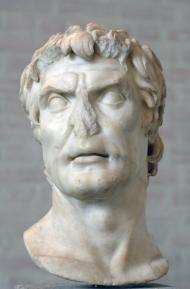
Lucius Cornelius Sulla Felix (, Latin pronunciation: [ˈɫuːkius kɔrˈneːlius ˈsulːa ˈfeːliːks]; 138–78 BC), commonly known as Sulla, was a Roman general and statesman of the late Roman Republic. Coming to fame for his military exploits, he was the first general during the late republic to march on Rome and win a civil war. After purging his opponents, he assumed the dictatorship, sought to strengthen the republican system by means of reforms to the constitution, and resigned his plenary powers after their enactment.
Sulla held the office of consul twice and revived the dictatorship. A gifted general, he achieved successes in wars against foreign and domestic opponents. Sulla rose to prominence during the war against the Numidian king Jugurtha, whom he captured as a result of Jugurtha's betrayal by the king's allies, although his superior Gaius Marius took credit for ending the war. He then fought successfully against Germanic tribes during the Cimbrian War, and Italian allies during the Social War. He was awarded the Grass Crown for his bravery at the Battle of Nola. Sulla was closely associated with Venus, adopting the title Epaphroditos, meaning favoured of Aphrodite.
Sulla was elected consul for 88 BC; however, amid a dispute over the command of the war against Mithridates of Pontus – initially awarded to Sulla by the Senate but revoked as part of a political deal between Marius and the plebeian tribune Publius Sulpicius – Sulla as consul took his army and marched on Rome. Violently expelling or killing Marius, Sulpicius, and their allies, Sulla left with his army at the close of his consular term to fight Mithridates in Greece. While abroad, Marius returned with Lucius Cornelius Cinna (who succeeded Sulla in the consulship) and they purged their own opponents from the city, including Sulla, whom they declared a public enemy. In the East, Sulla crushed the Pontic armies at the battles of Chaeronea and Orchomenos (86 BC), but offered a generous peace to Mithridates, so he could return to Rome. Although Marius and Cinna had by this point died, Sulla crushed the successors of their faction and won a decisive victory outside Rome at the Battle of the Colline Gate (82 BC).
Forcibly taking control of Roman politics, Sulla revived the office of dictator, which had been dormant since the Second Punic War, over a century before. Even before his dictatorship, he started proscriptions to purge his opponents; with his dictatorial powers, he reformed Roman constitutional laws to restore the primacy of the Senate and limit the power of the tribunes of the plebs. He resigned his dictatorship at the start of 80 BC and assumed an ordinary consulship for the rest of the year. After that consulship, Sulla retired to private life and died shortly thereafter in 78 BC. Sulla left a lasting impression on the next generation of leaders, such as Pompey and Julius Caesar, who followed his precedent to attain political power through force.
Read more...Nicopolis
Nicopolis (born c.150 BC) was a Roman hetaira possibly of Greek origin.
She was likely a former slave from Greece, who earned her fortune as a prostitute. Ernst Badian suggests that Nicopolis was not her real name.
She is foremost known as the alleged lover and benefactor of the young Sulla, whom she was older than. She was an independently rich woman by the time Sulla became her lover. They had a long term relationship. After her death, she left him her fortune. Their relationship, and the benefit of her fortune on his career, has often been referred to in the history of Sulla. Her fortune in combination with that of his stepmother, helped Sulla on his way in his political career.
She is a character The First Man in Rome by Colleen McCullough.
Read more...