Who dated Maria Casarès?
Jean Servais dated Maria Casarès from ? until . The age gap was 10 years, 1 months and 28 days.
Albert Camus dated Maria Casarès from until . The age gap was 9 years, 0 months and 14 days.
Gérard Philipe dated Maria Casarès from until ?. The age gap was 0 years, 0 months and 13 days.
Albert Camus dated Maria Casarès from until . The age gap was 9 years, 0 months and 14 days.
Maria Casarès
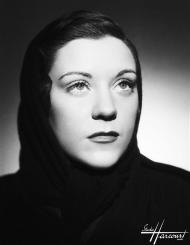
Maria Casarès (; * 21. November 1922 in A Coruña, Spanien; † 22. November 1996 im Logis de la Vergne, Alloue, Charente) war eine französische Schauspielerin spanischer Herkunft.
Read more...Jean Servais
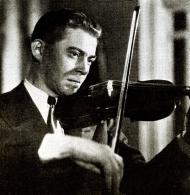
Jean Servais (French: [ʒɑ̃ sɛʁvɛ]; 24 September 1910 – 17 February 1976) was a Belgian film and stage actor. He acted in many 20th century French cinema productions, from the 1930s through the early 1970s.
He was married to actress Dominique Blanchar (1952–1953) and later to Gilberte Graillot.
Read more...Maria Casarès
Albert Camus
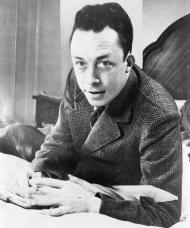
Albert Camus ( kam-OO, French: [albɛʁ kamy] ; 7 November 1913 – 4 January 1960) was a French philosopher, novelist, author, dramatist, journalist, world federalist, and political activist. He was the recipient of the 1957 Nobel Prize in Literature at the age of 44, the second-youngest recipient in history, and the first laureate in literature born in Africa. His works include The Stranger, The Plague, The Myth of Sisyphus, The Fall and The Rebel.
Camus was born in French Algeria to pied-noir parents. He spent his childhood in a poor neighbourhood and later studied philosophy at the University of Algiers. He was in Paris when the Germans invaded France during World War II in 1940. Camus tried to flee but finally joined the French Resistance where he served as editor-in-chief at Combat, an outlawed newspaper. After the war, he was a celebrity figure and gave many lectures around the world. He married twice but had many extramarital affairs. Camus was politically active; he was part of the left that opposed Joseph Stalin and the Soviet Union because of their totalitarianism. Camus was a moralist and leaned towards anarcho-syndicalism. He was part of many organisations seeking European integration. During the Algerian War (1954–1962), he kept a neutral stance, advocating a multicultural and pluralistic Algeria, a position that was rejected by most parties.
Philosophically, Camus's views contributed to the rise of the philosophy known as absurdism. Some consider Camus's work to show him to be an existentialist, even though he himself firmly rejected the term throughout his lifetime.
Read more...Maria Casarès
Gérard Philipe
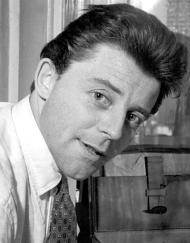
Gérard Philipe (nacido Gérard Albert Philip; Cannes, 4 de diciembre de 1922-París, 25 de noviembre de 1959) fue un actor de cine y teatro francés, uno de los más famosos de su época. Por su belleza física y condiciones histriónicas fue llamado en Francia "El príncipe de los actores", convirtiéndose en una figura de culto.
Read more...Maria Casarès
Albert Camus
Albert Camus ( kam-OO, French: [albɛʁ kamy] ; 7 November 1913 – 4 January 1960) was a French philosopher, novelist, author, dramatist, journalist, world federalist, and political activist. He was the recipient of the 1957 Nobel Prize in Literature at the age of 44, the second-youngest recipient in history, and the first laureate in literature born in Africa. His works include The Stranger, The Plague, The Myth of Sisyphus, The Fall and The Rebel.
Camus was born in French Algeria to pied-noir parents. He spent his childhood in a poor neighbourhood and later studied philosophy at the University of Algiers. He was in Paris when the Germans invaded France during World War II in 1940. Camus tried to flee but finally joined the French Resistance where he served as editor-in-chief at Combat, an outlawed newspaper. After the war, he was a celebrity figure and gave many lectures around the world. He married twice but had many extramarital affairs. Camus was politically active; he was part of the left that opposed Joseph Stalin and the Soviet Union because of their totalitarianism. Camus was a moralist and leaned towards anarcho-syndicalism. He was part of many organisations seeking European integration. During the Algerian War (1954–1962), he kept a neutral stance, advocating a multicultural and pluralistic Algeria, a position that was rejected by most parties.
Philosophically, Camus's views contributed to the rise of the philosophy known as absurdism. Some consider Camus's work to show him to be an existentialist, even though he himself firmly rejected the term throughout his lifetime.
Read more...