Who dated Xu Guangping?
Lu Xun dated Xu Guangping from until . The age gap was 16 years, 4 months and 18 days.
Xu Guangping
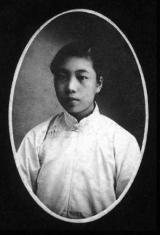
Xu Guangping (simplified Chinese: 许广平; traditional Chinese: 許廣平; Jyutping: heoi2 gwong2 ping4, 1898 – 1968), courtesy name Shuyuan (simplified Chinese: 漱园; traditional Chinese: 漱園), infant name Xia (simplified Chinese: 霞; traditional name: 霞), was a Chinese female writer, politician, and social activist. She was well known as the partner of Chinese writer Lu Xun.
Read more...Lu Xun
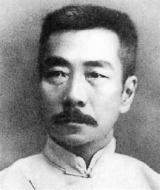
Lu Xun (Chinese: 魯迅; pinyin: Lǔ Xùn, [lù ɕŷn]; 25 September 1881 – 19 October 1936), pen name of Zhou Shuren, born Zhou Zhangshou, was a Chinese writer. A leading figure of modern Chinese literature, he wrote in both vernacular and literary Chinese as a novelist, literary critic, essayist, poet, translator and political commentator, known for his sharp, satirical style and critical reflections on Chinese history and culture.
Lu Xun was born into a declining family of landlords and scholar-officials in Shaoxing, Zhejiang, and was the elder brother of Zhou Zuoren. Although he initially aspired to sit for the imperial examinations, his family’s declining fortunes compelled him to attend government-funded schools, where he was exposed to Western science and thought. In 1904, he enrolled at the Sendai Medical College in Japan, but left medicine to pursue literature. Financial difficulties forced his return to China, where he taught at various schools and colleges before taking a position at the Ministry of Education.
Lu Xun pioneered the New Culture Movement by publishing the first novel in vernacular Chinese, Diary of a Madman, in 1918. He gained prominence through his political writings in La Jeunesse following the May Fourth Movement in 1919. From the late 1920s onward, Lu Xun became increasingly engaged with Marxist thought and leftist politics. In the 1930s, he maintained a close but fraught relationship with the League of Left-Wing Writers. His works have been canonized in the People's Republic of China owing to Mao Zedong's high regard for him.
Read more...