Who dated Hortense Mancini?
Charles II of England dated Hortense Mancini from ? until ?. The age gap was 15 years, 11 months and 29 days.
Nils Banér dated Hortense Mancini from ? until ?.
Hortense Mancini
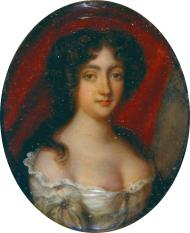
Hortense Mancini, Duchess of Mazarin (6 June 1646 – 2 July 1699), was a niece of Cardinal Mazarin, chief minister of France, and a mistress of Charles II, King of England, Scotland, and Ireland. She was the fourth of the five famous Mancini sisters, who, along with two of their female Martinozzi cousins, were known at the court of King Louis XIV of France as the Mazarinettes.
Read more...Charles II of England
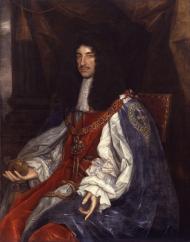
Charles II (29 May 1630 – 6 February 1685) was King of Scotland from 1649 until 1651 and King of England, Scotland, and Ireland from the 1660 Restoration of the monarchy until his death in 1685.
Charles II was the eldest surviving child of Charles I of England, Scotland and Ireland and Henrietta Maria of France. After Charles I's execution at Whitehall on 30 January 1649, at the climax of the English Civil War, the Parliament of Scotland proclaimed Charles II king on 5 February 1649. However, England entered the period known as the English Interregnum or the English Commonwealth with a republican government eventually led by Oliver Cromwell. Cromwell defeated Charles II at the Battle of Worcester on 3 September 1651, and Charles fled to mainland Europe. Cromwell became Lord Protector of England, Scotland and Ireland. Charles spent the next nine years in exile in France, the Dutch Republic and the Spanish Netherlands. A political crisis after Cromwell's death in 1658 resulted in the restoration of the monarchy in 1660, and Charles was invited to return to Britain. On 29 May 1660, his 30th birthday, he was received in London to public acclaim.
Charles's English Parliament enacted the Clarendon Code, to shore up the position of the re-established Church of England. Charles acquiesced to these new laws even though he favoured a policy of religious tolerance. The major foreign policy issue of his early reign was the Second Anglo-Dutch War. In 1670, he entered into the Treaty of Dover, an alliance with his cousin, King Louis XIV of France. Louis agreed to aid him in the Third Anglo-Dutch War and pay him a pension, and Charles secretly promised to convert to Catholicism at an unspecified future date. Charles attempted to introduce religious freedom for Catholics and Protestant dissenters with his 1672 Royal Declaration of Indulgence, but the English Parliament forced him to withdraw it. In 1679, Titus Oates's fabrication of a supposed Popish Plot sparked the Exclusion Crisis when it was revealed that Charles's brother and heir presumptive, James, Duke of York, had become a Catholic. The crisis saw the birth of the pro-exclusion Whig and anti-exclusion Tory parties. Charles sided with the Tories and, after the discovery of the Rye House Plot to murder Charles and James in 1683, some Whig leaders were executed or forced into exile. Charles dissolved the English Parliament in 1681 and ruled alone until his death in 1685.
A patron of the arts and sciences, Charles became known for his affability and friendliness, and for allowing his subjects easy access to his person. But he also showed an almost impenetrable reserve, especially concerning his political agendas. His court gained a reputation for moral laxity. Charles's marriage to Catherine of Braganza produced no surviving children, but the king acknowledged at least 12 illegitimate children by various mistresses. He was succeeded by his brother James.
Read more...Hortense Mancini
Nils Banér
Nils Banér, född 1654, död den 29 oktober 1684 i London, var en svensk friherre, rector illustris och konvertit, som avled i en uppmärksammad duell.
Nils Banér var tredje barn och äldste son till fältmarskalken och riksrådet Gustaf Persson Banér och dennes första hustru Brita Bielke. Under faderns tid som generalguvernör över Skåne inskrevs sonen 1668 som student vid det nygrundade Lunds universitet. Här hedrades han vårterminen 1670 med att väljas till universitetets förste rector illustris, och omvaldes som sådan även höstterminen samma år. Vid detta omval uttryckte professorerna sin uppskattning av Banérs "under förra halfåret ådagalagde stora nit och berömlige förtjenster om alla academiæ angelägenheter".
Efter tiden i Lund tjänstgjorde Banér en period (från 1677) som extra ordinarie kanslist vid det kungliga kansliet i Stockholm innan han gav sig ut på en långresa i Europa. Under denna resa kom han under inflytande av katolicismen och konverterade till denna i Wien. Efter religionsbytet kunde han inte längre återvända till hemlandet och hamnade i stället så småningom i London.
I den brittiska huvudstaden blev Banér involverad i en kärleksrelation med den något äldre fransk-italienska hertiginnan Hortense Mancini, systerdotter till den franske försteministern kardinal Mazarin och en av kung Karl II:s mätresser. Härigenom gjorde han sig på något sätt till ovän med Mancinis systerson, prins Philippe av Savojen-Soissons (en bror till den sedermera berömde fältherren Eugen av Savojen). Konflikten resulterade i en duell i Hyde Park där Banér sårades så allvarligt i buken att han avled. Han begravdes i St Martin-in-the-Fields. Händelsen rapporterades hem till Sverige av den svenske envoyén i London Johan Leijonbergh. Hortense Mancini skall, enligt hennes förtrogne Charles de Saint-Évremond, ha varit så förtvivlad över sin svenske älskares död att hon övervägde att gå i kloster.
Read more...