Who dated Erich Maria Remarque?
Marlene Dietrich dated Erich Maria Remarque from ? until ?. The age gap was 3 years, 6 months and 5 days.
Erich Maria Remarque
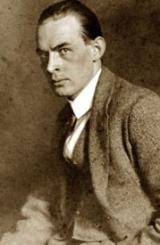
Erich Maria Remarque, né Erich Paul Remark le à Osnabrück (Province de Hanovre) et mort le à Locarno (Suisse), est un écrivain germano-américain.
Un de ses livres, À l'Ouest, rien de nouveau (Im Westen nichts Neues), un roman pacifiste sur la Première Guerre mondiale, connut, dès sa parution en 1929, un succès mondial retentissant et reste un ouvrage phare sur le premier conflit mondial. Très rapidement porté à l'écran et oscarisé, il provoque la haine des ultranationalistes allemands et des nazis. Remarque se réfugie en Suisse dès l'arrivée des nazis au pouvoir. À l'instar de Catherine soldat (Die Katrin wird Soldat) d'Adrienne Thomas, ce livre fut brûlé lors des autodafés de 1933 en Allemagne. Déchu de sa nationalité allemande par le régime nazi en , exilé en Suisse puis aux États-Unis, E.M. Remarque obtient la nationalité américaine en 1947.
Read more...Marlene Dietrich
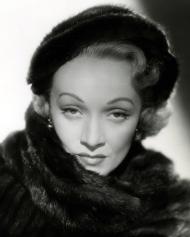
Marie Magdalene "Marlene" Dietrich (, German: [maʁˈleːnə ˈdiːtʁɪç] ; 27 December 1901 – 6 May 1992) was a German and American actress and singer whose career spanned nearly seven decades. In 1920s Berlin, she performed on the stage and in silent films. Her performance as Lola Lola in Josef von Sternberg's The Blue Angel (1930) brought her international acclaim and a contract with Paramount Pictures. Dietrich starred in many Hollywood films, including six roles directed by Sternberg: Morocco (1930) (her only Academy Award nomination), Dishonored (1931), Shanghai Express and Blonde Venus (both 1932), The Scarlet Empress (1934), The Devil Is a Woman (1935). Throughout World War II, she was a high-profile entertainer in the United States. Although she delivered notable performances in several post-war films, including Billy Wilder's A Foreign Affair (1948), Alfred Hitchcock's Stage Fright (1950), Billy Wilder's Witness for the Prosecution (1957), Orson Welles's Touch of Evil (1958), and Stanley Kramer's Judgment at Nuremberg (1961), she spent most of the 1950s to the 1970s touring the world as a marquee live-show performer.
Dietrich was known for her humanitarian efforts during World War II, housing German and French exiles, providing financial support and advocating their American citizenship. For her work on improving morale on the front lines during the war, she received various honors from the United States, France, Belgium, and Israel. In 1999, the American Film Institute named Dietrich the ninth greatest female screen legend of classic Hollywood cinema.
Read more...