Who dated Marlene Dietrich?
John Wayne dated Marlene Dietrich from ? until ?. The age gap was 5 years, 4 months and 29 days.
Yul Brynner dated Marlene Dietrich from ? until ?. The age gap was 18 years, 6 months and 14 days.
Jean Gabin dated Marlene Dietrich from ? until ?. The age gap was 2 years, 4 months and 20 days.
John F. Kennedy dated Marlene Dietrich from ? until ?. The age gap was 15 years, 5 months and 2 days.
Wilhelm Michel dated Marlene Dietrich from until ?.
Erich Maria Remarque dated Marlene Dietrich from until ?. The age gap was 3 years, 6 months and 5 days.
Marlene Dietrich
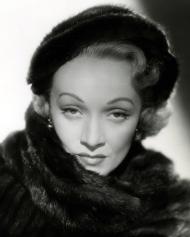
Marie Magdalene "Marlene" Dietrich (, German: [maʁˈleːnə ˈdiːtʁɪç] ; 27 December 1901 – 6 May 1992) was a German and American actress and singer whose career spanned nearly seven decades. In 1920s Berlin, she performed on the stage and in silent films. Her performance as Lola Lola in Josef von Sternberg's The Blue Angel (1930) brought her international acclaim and a contract with Paramount Pictures. Dietrich starred in many Hollywood films, including six roles directed by Sternberg: Morocco (1930) (her only Academy Award nomination), Dishonored (1931), Shanghai Express and Blonde Venus (both 1932), The Scarlet Empress (1934), The Devil Is a Woman (1935). Throughout World War II, she was a high-profile entertainer in the United States. Although she delivered notable performances in several post-war films, including Billy Wilder's A Foreign Affair (1948), Alfred Hitchcock's Stage Fright (1950), Billy Wilder's Witness for the Prosecution (1957), Orson Welles's Touch of Evil (1958), and Stanley Kramer's Judgment at Nuremberg (1961), she spent most of the 1950s to the 1970s touring the world as a marquee live-show performer.
Dietrich was known for her humanitarian efforts during World War II, housing German and French exiles, providing financial support and advocating their American citizenship. For her work on improving morale on the front lines during the war, she received various honors from the United States, France, Belgium, and Israel. In 1999, the American Film Institute named Dietrich the ninth greatest female screen legend of classic Hollywood cinema.
Read more...John Wayne
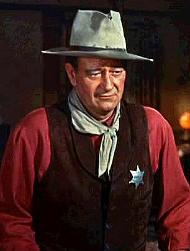
Marion Robert Morrison (May 26, 1907 – June 11, 1979), known professionally as John Wayne, was an American actor. Nicknamed "Duke", he became a popular icon through his starring roles in films which were produced during Hollywood's Golden Age, especially in Western and war movies. His career flourished from the silent film era of the 1920s through the American New Wave, as he appeared in a total of 179 film and television productions. He was among the top box-office draws for three decades and appeared with many other important Hollywood stars of his era. In 1999, the American Film Institute selected Wayne as one of the greatest male stars of classic American cinema.
Wayne was born in Winterset, Iowa, but grew up in Southern California. After losing his football scholarship to the University of Southern California due to a bodysurfing accident, he began working for the Fox Film Corporation. He appeared mostly in small parts, but gained a leading role in Raoul Walsh's Western The Big Trail (1930), an early widescreen film epic that was a box-office failure. He played leading roles in numerous B movies during the 1930s, most of them also Westerns, without becoming a major name. John Ford's Stagecoach (1939) made Wayne a mainstream star, and he starred in 142 motion pictures altogether. According to biographer Ronald Davis, "John Wayne personified for millions the nation's frontier heritage."
Wayne's other roles in Westerns included a cattleman driving his herd on the Chisholm Trail in Red River (1948), a Civil War veteran whose niece is abducted by a tribe of Comanches in The Searchers (1956), a troubled rancher competing with a lawyer (James Stewart) for a woman's hand in The Man Who Shot Liberty Valance (1962), and a cantankerous one-eyed marshal in True Grit (1969), for which he received the Academy Award for Best Actor. Wayne is also remembered for his roles in The Quiet Man (1952) with Maureen O'Hara, Rio Bravo (1959) with Dean Martin, and The Longest Day (1962). In his final screen performance, he starred as an aging gunfighter suffering from cancer in The Shootist (1976). Wayne made his last public appearance at the Academy Awards ceremony on April 9, 1979, and died of stomach cancer two months later. In 1980, he was posthumously awarded the Presidential Medal of Freedom, the highest civilian honor of the United States.
Read more...Marlene Dietrich
Yul Brynner
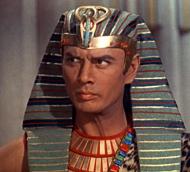
Yul Brynner (nacido como Yuliy Borisovich Briner; Vladivostok, 11 de julio de 1920-Nueva York, 10 de octubre de 1985) fue un actor ruso, reconocido por su distintiva presencia escénica y su icónica cabeza rapada. Ganador del premio Óscar al mejor actor por su interpretación del rey de Siam en El rey y yo (1956), Brynner se destacó en roles memorables como Ramsés II en Los diez mandamientos (1956), Chris Adams en Los siete magníficos (1960) y el pistolero robótico en Westworld (1973). Su carrera abarcó teatro, cine y televisión, siendo especialmente célebre por interpretar más de 4600 veces el papel protagonista en la obra musical El rey y yo en Broadway y giras internacionales. Además de su talento actoral, Brynner fue un activista contra el tabaquismo tras ser diagnosticado con cáncer de pulmón, enfermedad que finalmente causó su muerte a los 65 años, dejando un legado perdurable en la cultura popular.
Read more...Marlene Dietrich
Jean Gabin
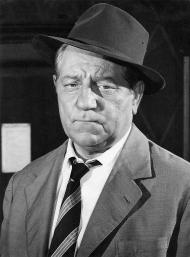
Jean Gabin Alexis Moncorgé (born Jean-Alexis Moncorgé), known as Jean Gabin (French: [ʒɑ̃ gabɛ̃]; 17 May 1904 – 15 November 1976), was a French actor and singer. Considered a key figure in French cinema, he starred in several classic films, including Pépé le Moko (1937), La grande illusion (1937), Le Quai des brumes (1938), La bête humaine (1938), Le jour se lève (1939), and Le plaisir (1952). During his career, he twice won the Silver Bear for Best Actor from the Berlin International Film Festival and the Volpi Cup for Best Actor from the Venice Film Festival, respectively. Gabin was made a member of the Légion d'honneur in recognition of the important role he played in French cinema.
Read more...Marlene Dietrich
John F. Kennedy
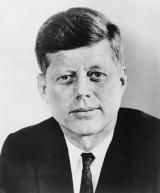
John Fitzgerald Kennedy (May 29, 1917 – November 22, 1963), also known as JFK, was the 35th president of the United States, serving from 1961 until his assassination in 1963. He was the youngest person elected president, at 43 years, and the first Catholic president. Kennedy served at the height of the Cold War, and the majority of his foreign policy concerned relations with the Soviet Union and Cuba. A member of the Democratic Party, Kennedy represented Massachusetts in both houses of the United States Congress before his presidency.
Born into the prominent Kennedy family in Brookline, Massachusetts, Kennedy graduated from Harvard University in 1940, joining the U.S. Naval Reserve the following year. During World War II, he commanded PT boats in the Pacific theater. Kennedy's survival following the sinking of PT-109 and his rescue of his fellow sailors made him a war hero and earned the Navy and Marine Corps Medal, but left him with serious injuries. After a brief stint in journalism, Kennedy represented a working-class Boston district in the U.S. House of Representatives from 1947 to 1953. He was subsequently elected to the U.S. Senate, serving as the junior senator from Massachusetts from 1953 to 1960. While in the Senate, Kennedy published his book Profiles in Courage, which won a Pulitzer Prize. Kennedy ran in the 1960 presidential election. His campaign gained momentum after the first televised presidential debates in American history, and he was elected president, narrowly defeating Republican opponent Richard Nixon, the incumbent vice president.
Kennedy's presidency saw high tensions with communist states in the Cold War. He increased the number of American military advisers in South Vietnam, and the Strategic Hamlet Program began during his presidency. In 1961, he authorized attempts to overthrow the Cuban government of Fidel Castro in the failed Bay of Pigs Invasion and Operation Mongoose. In October 1962, U.S. spy planes discovered Soviet missile bases had been deployed in Cuba. The resulting period of tensions, termed the Cuban Missile Crisis, nearly resulted in nuclear war. In August 1961, after East German troops erected the Berlin Wall, Kennedy sent an army convoy to reassure West Berliners of U.S. support, and delivered one of his most famous speeches in West Berlin in June 1963. In 1963, Kennedy signed the first nuclear weapons treaty. He presided over the establishment of the Peace Corps, Alliance for Progress with Latin America, and the continuation of the Apollo program with the goal of landing a man on the Moon before 1970. He supported the civil rights movement but was only somewhat successful in passing his New Frontier domestic policies.
On November 22, 1963, Kennedy was assassinated in Dallas. His vice president, Lyndon B. Johnson, assumed the presidency. Lee Harvey Oswald was arrested for the assassination, but he was shot and killed by Jack Ruby two days later. The Federal Bureau of Investigation (FBI) and the Warren Commission both concluded Oswald had acted alone, but conspiracy theories about the assassination persist. After Kennedy's death, Congress enacted many of his proposals, including the Civil Rights Act of 1964 and the Revenue Act of 1964. He ranks highly in polls of U.S. presidents with historians and the general public. His personal life has been the focus of considerable sustained interest following public revelations in the 1970s of his chronic health ailments and extramarital affairs. Kennedy is the most recent U.S. president to have died in office.
Read more...Marlene Dietrich
Wilhelm Michel
Wilhelm Michel, genannt Willy Michel (geboren 1901; gestorben Juni 1988) war ein deutscher Bäcker, Kommunalpolitiker in Hannover, Wehrwirtschaftsführer für Niedersachsen sowie Liebessubjekt der Schauspielerin Marlene Dietrich. Die Anfang des 21. Jahrhunderts aufgefundenen Liebesbriefe der Dietrich an Wilhelm Michel gelten als „die frühesten bislang bekannten Dokumente des Weltstars.“
Read more...Marlene Dietrich
Erich Maria Remarque
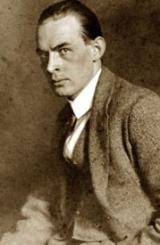
Erich Maria Remarque, né Erich Paul Remark le à Osnabrück (Province de Hanovre) et mort le à Locarno (Suisse), est un écrivain germano-américain.
Un de ses livres, À l'Ouest, rien de nouveau (Im Westen nichts Neues), un roman pacifiste sur la Première Guerre mondiale, connut, dès sa parution en 1929, un succès mondial retentissant et reste un ouvrage phare sur le premier conflit mondial. Très rapidement porté à l'écran et oscarisé, il provoque la haine des ultranationalistes allemands et des nazis. Remarque se réfugie en Suisse dès l'arrivée des nazis au pouvoir. À l'instar de Catherine soldat (Die Katrin wird Soldat) d'Adrienne Thomas, ce livre fut brûlé lors des autodafés de 1933 en Allemagne. Déchu de sa nationalité allemande par le régime nazi en , exilé en Suisse puis aux États-Unis, E.M. Remarque obtient la nationalité américaine en 1947.
Read more...